

The wrong question is "who has the nicest work?"
Every agency shortlist starts the same way: scroll a few portfolios, pick the prettiest homepage, book a call. It is a reasonable first filter, and a genuinely useless final one. A polished case study on an agency’s own site tells you they can design a beautiful screen. It tells you nothing about whether that same team returns your calls in week six, hands over a site you can actually edit, or is still in business — or still assigned to your account — eighteen months from now.
South African SMEs get burned less often by bad design and more often by a mismatch between what was promised in the pitch and what was actually delivered in the contract: vague scope, no named process, unclear ownership of the finished asset, and a support arrangement nobody wrote down. None of that shows up on a portfolio page.
The framework below treats agency selection as a delivery-capability question, not a taste question. Taste still matters — you should like the work — but it should be the second filter, applied after you have confirmed the agency can actually deliver and hand over a site that stays yours.
What to actually evaluate, and what it looks like when it is missing
| What to check | What good looks like | Red flag |
|---|---|---|
| Relevant portfolio evidence | Two or three examples close to your size, sector or complexity, with a named contact you can ask about the actual experience | Only glossy final screenshots, no context on scope, timeline or your ability to speak to a past client |
| Delivery process | A clear, named sequence: discovery, design, build, QA, launch, support — with rough timeframes | A vague "we’ll get started once you sign" with no described stages |
| Who does the work | Named individuals or a defined small team who will actually touch your project | A sales conversation with no visibility into who builds, reviews or supports afterward |
| Ownership terms | Domain, hosting/platform account and analytics registered to your business by default | Silence on ownership, or accounts registered under the agency’s name "for convenience" |
| Pricing structure | A scoped quote naming templates, integrations, content responsibilities and exclusions | One number covering an undefined "full website" with no breakdown |
| Post-launch support | A written support window, response times and a clear line between included fixes and new paid work | A verbal "we’ll sort you out" with nothing in the contract |
Read a portfolio for relevance, not gloss
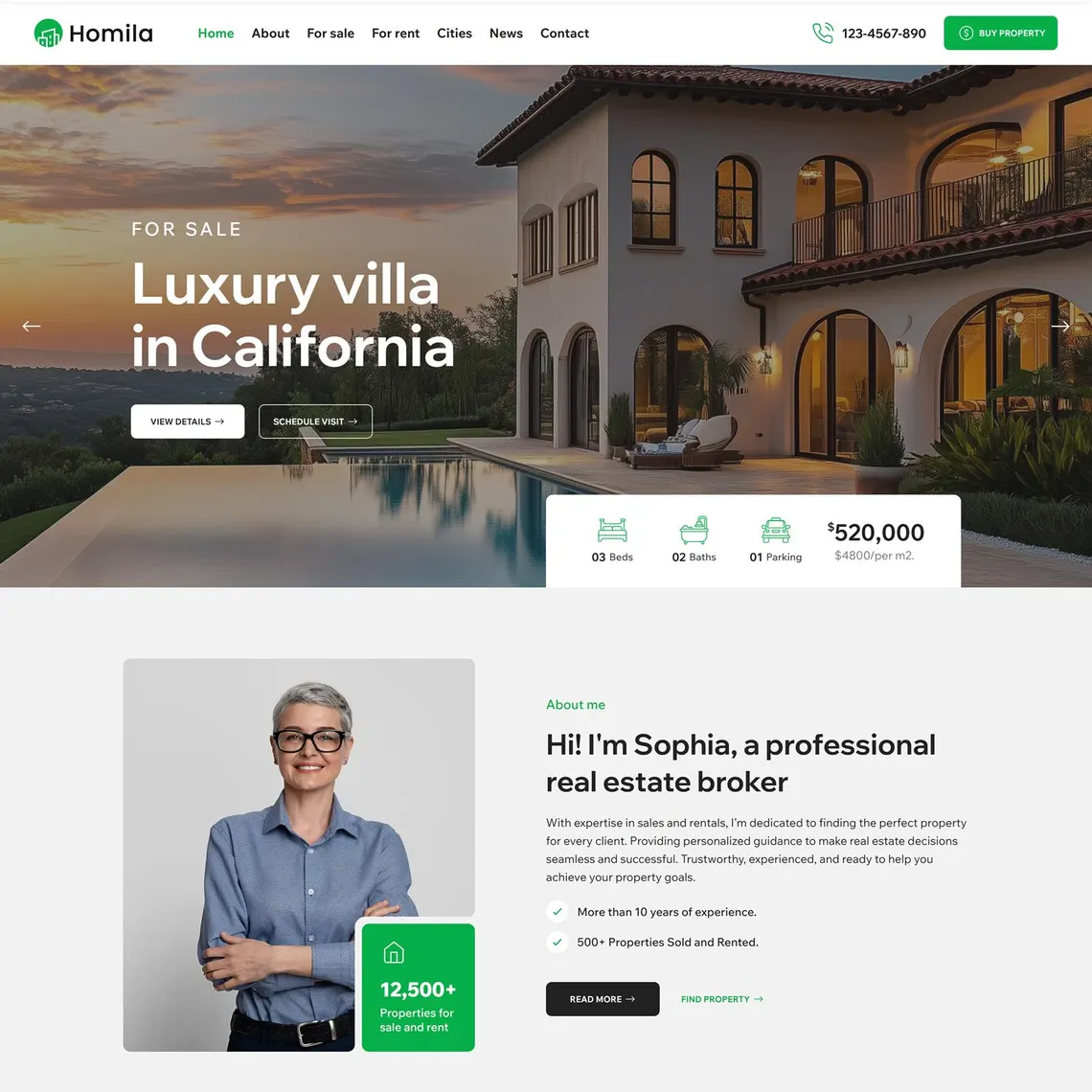
A portfolio built entirely from award-style hero shots tells you an agency can design a homepage under ideal conditions: perfect photography, a generous timeline and a client who approved everything on the first round. That is not the project you are about to run. Ask instead for examples close to your actual constraints, similar budget, similar content readiness, similar industry complexity, and ask what went wrong on at least one of them. Every real project has a rough patch; an agency that claims otherwise is either new or not being straight with you.
Look past the homepage. Click into an inner service page, a contact form, a mobile view on your own phone over mobile data rather than office wifi. A beautiful desktop hero that stutters on a mid-range Android phone on a 4G connection is exactly the experience a large share of your own visitors will have, and it is a far more honest test than the polished screenshot on the agency's own case-study page.
If possible, speak directly to a past client, not a quote pulled from the agency's own site, but an actual conversation. Ask what surprised them, how change requests were handled once the project was underway, and whether they would use the same agency again for a second project. That last question in particular tends to surface the honest answer fast.
What a web design company's own site should prove
Searchers who type variations of "web design company site" are often doing something practical: opening the agency's own website and deciding whether the firm looks credible enough to shortlist. That instinct is useful, if you know what to score.
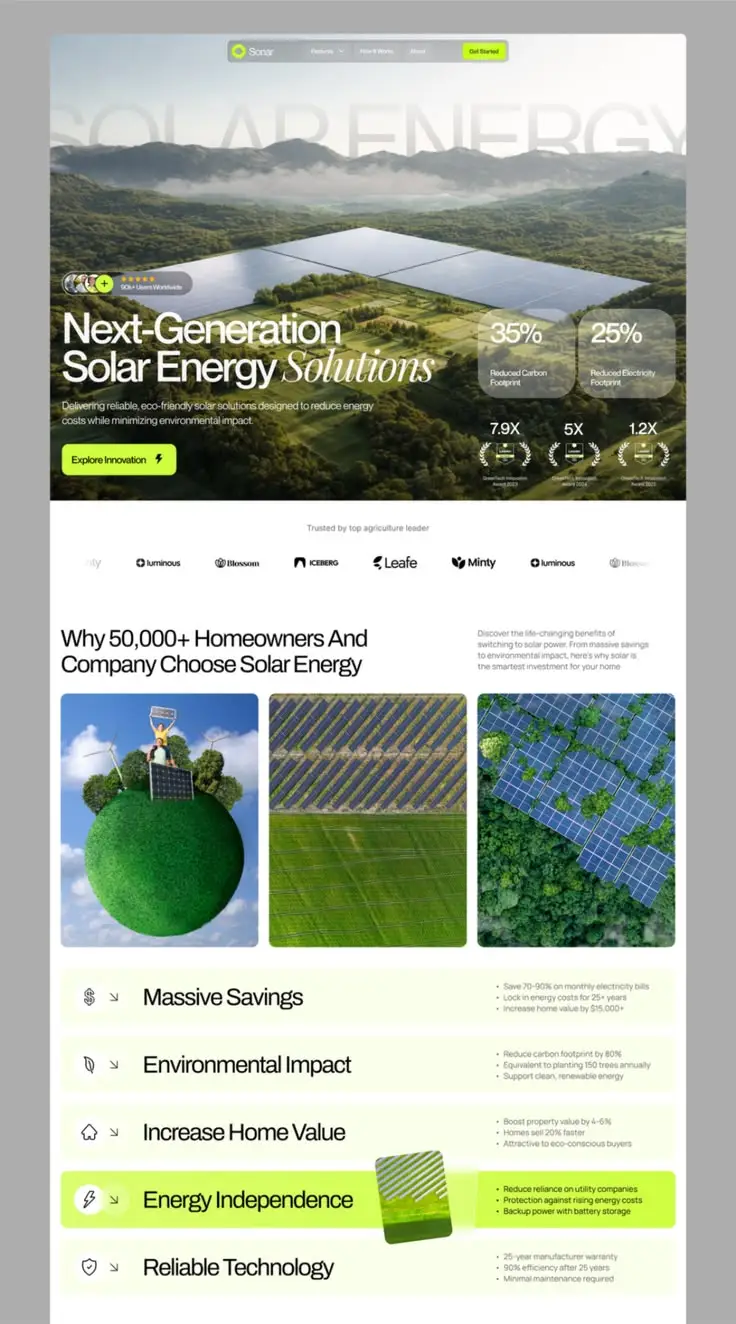
A strong agency site should make the offer obvious within seconds, show relevant work with context, explain process without buzzword fog, state pricing bands or how quotes are formed, and give you a clear next step (brief, mockup, call or WhatsApp). If the firm's own contact path is buried, slow or confusing, treat that as a preview of how your project may feel.
What the agency site should not do is replace diligence. A polished marketing site can still hide vague contracts, outsourced delivery or weak support. Use the company's site as a filter for clarity and conversion honesty, then verify process, ownership and references the same way you would for any website design company on your shortlist.
Find out who actually builds your site before you sign anything
Plenty of South African web projects are sold by one person and delivered by an entirely different team, sometimes outsourced further than the client ever finds out. That is not automatically a problem — subcontracted specialists can do excellent work — but it becomes one the moment nobody tells you it is happening, because it changes who is actually accountable when something needs fixing after launch.
Ask directly: who designs this, who builds it, and who do I contact if something breaks in three months? A confident answer names people or a defined small team. A vague answer that keeps redirecting back to "the studio" or "our process" is worth pressing on, politely but firmly, before you sign.
This matters more for SMEs than it sounds. A freelancer with a strong, focused process can outperform a larger studio that spreads a junior designer across six accounts at once. Team size is not the signal that matters — clarity about who is doing the work, and how much of their attention your project actually gets, is.
A normal discovery-to-launch process, so you can spot a vague one
- DiscoveryGoals, audiences, must-have pages, content readiness, integrations and success metrics get documented — not assumed.
- DesignWireframes or mockups reviewed against the discovery brief, with a defined number of revision rounds.
- BuildTemplates, CMS structure, forms and integrations get built and connected — not just visual pages.
- QAMobile testing, form testing, analytics verification and cross-browser checks happen before anyone calls it done.
- LaunchDomain, DNS, redirects (if migrating) and go-live checks are performed on an agreed date, with a rollback plan.
- SupportA defined post-launch window covers fixes; a separate rate or retainer covers new work.
Ownership is a contract term, not a courtesy
A website is a business asset. Treat the domain registration, hosting or platform account, analytics property and CMS access the same way you would treat a lease or a piece of equipment — registered to the business, not to the agency "for ease of management." Ask this question before you sign, in writing: if we ended this relationship tomorrow, could we walk away with our site, our data and our domain intact?
A reasonable agency will register these in your name by default, or at minimum grant your business full admin access from day one. An unreasonable one will resist the question, or offer a vague reassurance instead of a written answer. That resistance is itself useful information — note it and keep asking.
This protects you even in the most benign version of a bad outcome: an agency that simply gets busy, changes direction, or shuts down. None of those scenarios should be able to take your website, your search rankings or three years of analytics history down with them.
Ownership checklist before you sign
- The domain is registered to your business, or you have full registrar access
- Hosting or platform account (Webflow, WordPress host, etc.) is under your ownership or you have full admin access
- Google Analytics, Search Console and any ad accounts are registered to your business
- You receive CMS login credentials and basic editor training before launch
- Source files, exports or a documented content structure are available on request
- The contract states what happens to access and files if the engagement ends
Price for the scope, not the label
| Path | Nexus starting price | What it should include |
|---|---|---|
| Launch platform site | R3,000 once-off | A focused offer, lean page set, mobile-first build and basic contact/lead paths |
| Business platform site | R5,500 once-off | A fuller service marketing site, CMS structure and stronger conversion paths |
| Pro platform site | R8,000 once-off | Broader templates, richer content operations and demanding integration needs |
| Custom development | From R5,000 | Unique workflows, product-like behaviour or complex data — scoped individually |
| Ecommerce | From R7,500 | Catalogue, payments and fulfilment rules as part of the core build |
Treat these as honest starting points for defined scope, not a promise every business needs the same shape of site. A quote that undercuts these bands significantly for an equivalent scope is either missing something, or planning to add it back later as an unplanned extra.
Weigh price signals honestly, in both directions
A quote well below the market range for the described scope usually means something is missing — content, QA, mobile testing, ownership handover, or support — not that you found a bargain. It tends to resurface later as a second invoice you did not plan for, once the gap becomes obvious.
A quote well above the range is not automatically superior either. Ask precisely what the premium buys: more senior time, a stronger strategic process, genuinely custom design work, or simply a bigger studio’s overhead. "Premium" should be a description of deliverables, not a synonym for confidence.
The useful comparison is never "cheap versus expensive." It is "scoped versus vague." Two quotes for the same defined job, at different price points, are worth comparing directly. Two quotes for two different undefined jobs are not comparable at all, regardless of the numbers attached to them.
Six questions worth asking on the very first call
A short, direct set of questions filters out most weak fits before a full proposal is even drafted — ask these before you request a quote, not after.
- Who specifically will design and build this, and are they on this call?
- Can you show me a project of similar size that had a real hiccup, and how you handled it?
- What happens to our domain, hosting and analytics accounts if we ever part ways?
- What is explicitly excluded from this quote?
- What does your support window look like after launch, in writing?
- What is your process if we request something outside the agreed scope midway through?
The Nexus take
Choose the team whose process you could explain back to a colleague in two sentences. If you cannot restate what happens between signing and launch, you have not actually evaluated a process — you have evaluated a sales pitch.
Nexus agency selection principle
What to do next
Shortlist three agencies using relevant portfolio evidence, then send each of them the same one-page brief so their quotes describe the same job. Ask every one of them the ownership question directly, in writing, before you sign anything.
Use our companion guide on comparing website quotes fairly to turn three different-looking proposals into one comparable sheet. If you are still defining scope, a short brief and a cost calculator will frame the conversation before you collect quotes at all.
Nexus can walk you through Launch, Business, Pro, custom or ecommerce scoping directly — with ownership and support terms stated plainly from the first conversation, not discovered after the invoice.


%20A%20Practical%20Buyer%E2%80%99s%20Guide.png)